©Unsplash
-
Feb 04, 2026 01:00
Anticythera occupies an isolated position in the Aegean Sea, between the southern tip of the Peloponnese and the northern coast of Crete. Connections are limited to a few ferries a week, a feature that has made it one of Greece's most isolated and unspoiled islands. Here, distance is not only geographical, but above all, cultural and temporal.
With fewer than fifty inhabitants and an area of less than 20 square kilometers, Anticythera seems to be a destination untouched by mass tourism. The small size of the island and the absence of large tourist flows have enabled the preservation of a rare atmosphere, dominated by calm and a daily life punctuated by ancestral rhythms.
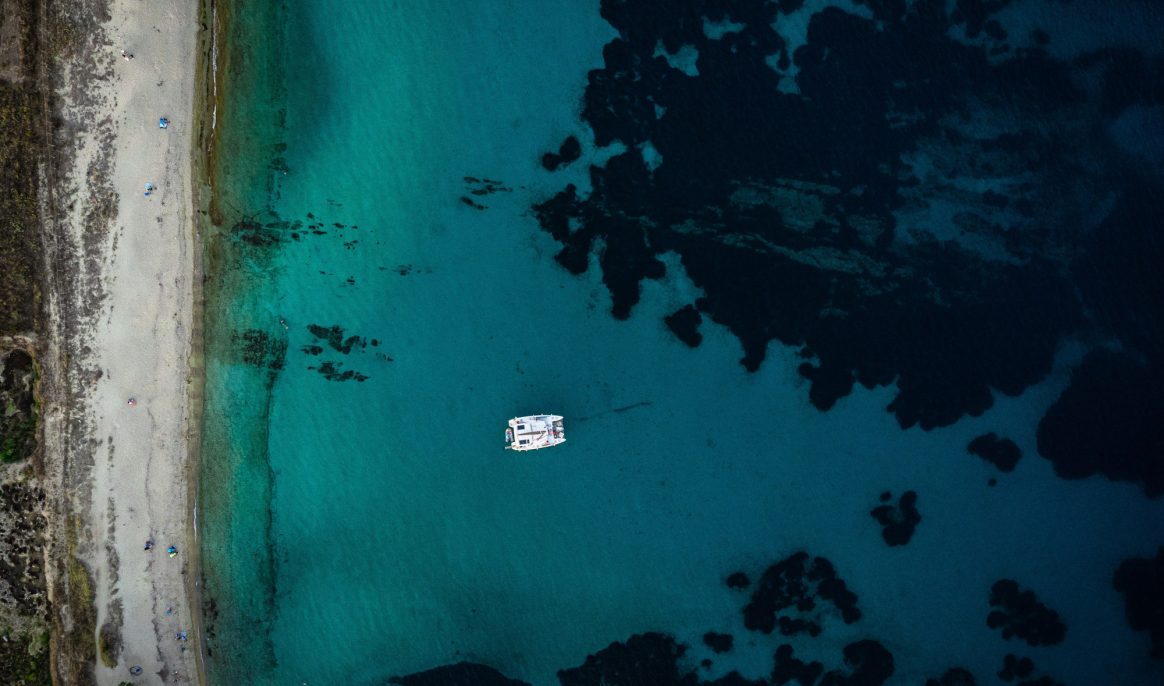
No hotel complexes, no shopping malls, no nightlife, just nature, a crystal-clear sea and a community that perpetuates the oldest, most deeply-rooted traditions.
Anticythera at a glance
- Surface area: approx. 20km²
- Population: less than 50 permanent residents (currently 45 permanent residents are registered)
- Connections: non-daily ferries from Crete and the Peloponnese
- Historical curiosity: the island is linked to the famous Anticythera mechanism, an ancient astronomical device recovered from the seabed.
Why Anticythera offers money to those who settle there
The question arises: why would a Greek island pay new residents to settle there? It was a slow but steady demographic decline that led the authorities to take this decision. With such a small population and a high average age, Anticythera risks total depopulation within a few years. To avoid this scenario, the Greek Orthodox Church, together with the local authorities, has launched a repopulation project. The initiative aims to attract new families, focusing particularly on those with children, in order to secure a future for the island and maintain essential services.
The repopulation program
This is not just a financial incentive, but also a genuine integration program:
- An allowance of around €500/month for three years
- The allocation of a house
- Access to a plot of arable land
- Active inclusion in the local community
The aim is not to provide temporary support, but to build a stable presence, so that new residents become an integral part of island life.
Who is the project aimed at?
(...) Anticythera is looking for people ready to put down roots, to start a new chapter in their lives. Young families, especially those with children, are the ideal profile, provided they are prepared to live on the island all year round.
Spending the winter here requires a high degree of adaptability. During the cold months, the isolation becomes even more acute and the pace slows down even more. A sincere interest in a simple lifestyle, linked to nature and far removed from the comforts of the city, is absolutely essential. (...)
The benefits
- Total immersion in unspoilt landscapes, crystal-clear seas and untouched nature
- A less stressful pace of life
- A small, close-knit and welcoming community
- A sustainable lifestyle, far from the pressures of city life
Challenges
- Lack of hospital facilities on the island
- The need to anticipate supply needs
- Internet connection available but not always stable
- Limited links with Crete and the Peloponnese
- Winter weather conditions that can interrupt transport for several days
Project status in January 2026
At the end of the selection process, up to five families will be chosen. The initiative has attracted considerable attention, even outside Greece, with a further peak in interest expected in the early months of 2026. As yet, no families have settled on the island. Delays in administrative procedures have slowed down the construction of new homes, effectively postponing moves. Applications are still open or under review. To keep abreast of any updates, we recommend contacting the local authorities or the Church of Anticythera.
Share: