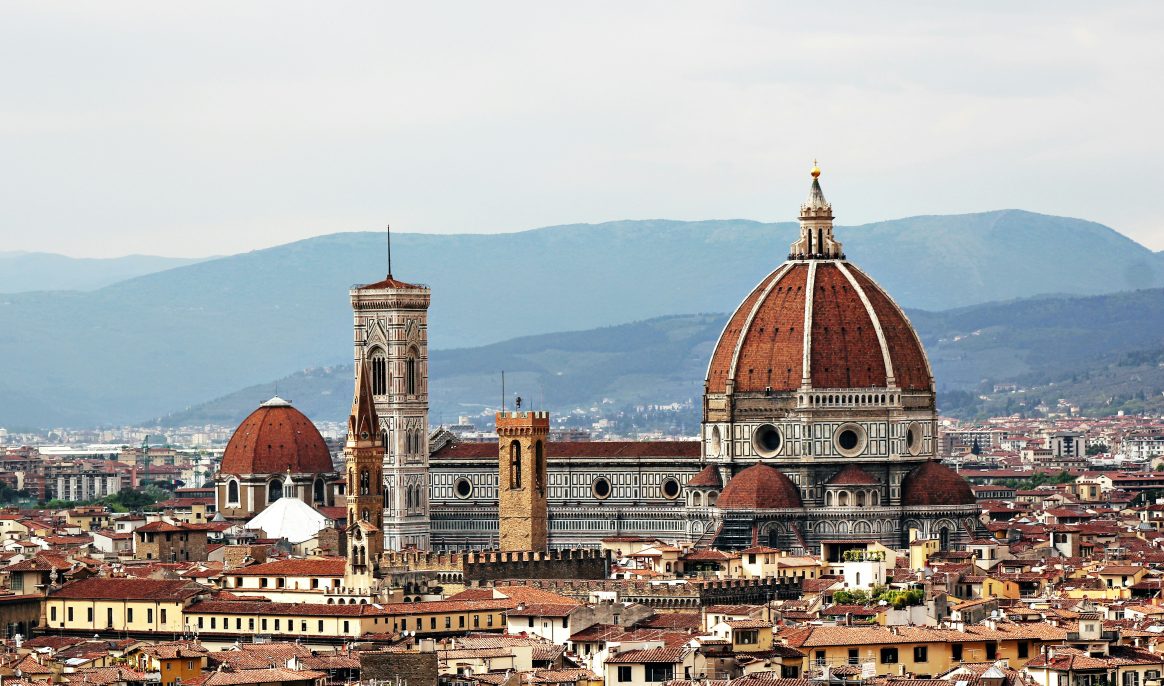
©Jonathan Körner via Unsplash - photo d'illustration de Florence
-
Sep 17, 2026 12:00
Florence extends its ban on short-term rentals beyond the Unesco perimeter: nine districts concerned by Palazzo Vecchio's anti-tourism approach.
The monumental heart of the city is no longer the only one concerned. In Florence, the battle against the uncontrolled expansion of tourist rentals now extends beyond the Unesco perimeter. In recent years, the city's residential districts have been turned upside down by the rise in short-term rentals. The municipality, headed by Mayor Sara Funaro, has approved a new resolution extending the ban on new businesses in nine strategic areas of the city.
The new areas concerned are Campo di Marte, Gavinana, San Jacopino, Statuto, Rifredi, Libertà, Savonarola, Bronzino and San Frediano-Pignoncino, sectors where the boom in tourist apartments is changing the social fabric of the neighborhoods.
Map of a city changing under the pressure of tourism
Behind the city council's decision lies a study carried out by the MEMOTEF department of La Sapienza University, in collaboration with the city council's statistics department. The figures reveal an impressive transformation: in the new zones concerned, there are over 67,000 dwellings, while in the historic center which is already subject to restrictions, there are only around 35,000 residential properties.
The analysis highlights a very specific risk: the so-called spillover effect, i.e. the displacement of tourist rentals from the center to neighboring districts. In some areas, such as Pignoncino and San Frediano, the number of visitor apartments has risen by over 90%.
Meanwhile, tourism continues to thrive. In 2025, Florence exceeded 4.7 million arrivals and 11.5 million overnight stays, an increase of over 10% on the previous year. Short-term rentals now account for more than half the beds available in the city.
Stricter rules: permits, surface areas and penalties
By-law, which came into force in May 2025, the municipality introduces very strict constraints. In order to open a tourist rental, a permit valid for five years is required and linked to both the owner and the property. In the event of sale, the permit automatically lapses.
Strict technical criteria are also put in place: apartments must have a minimum surface area of 28 square meters, with single rooms of at least 9 square meters and double rooms of at least 14 square meters. Entry in the municipal tourist rental register is also mandatory. Penalties are severe: they range from 1,000 to 10,000 euros, and can go as far as revocation of the authorization in the event of repeated violations or evasion of the tourist tax.
Political and economic tug-of-war: a city divided over the "Florence model"
The measure immediately rekindled tensions. Property managers are denouncing an attack on an entire sector that provides a livelihood for businesses, maintenance staff and hospitality professionals. According to these players, the initial blockades have neither encouraged residents to return to the center, nor lowered traditional rents.
On the other hand, trade unions and housing rights movements are defending the need to halt an urban transformation that threatens to drive residents out of historic districts. In the absence of a national law, Florence has thus become Italy's first major laboratory for the regulation of tourist accommodation.
Source: City of Florence
Share: