
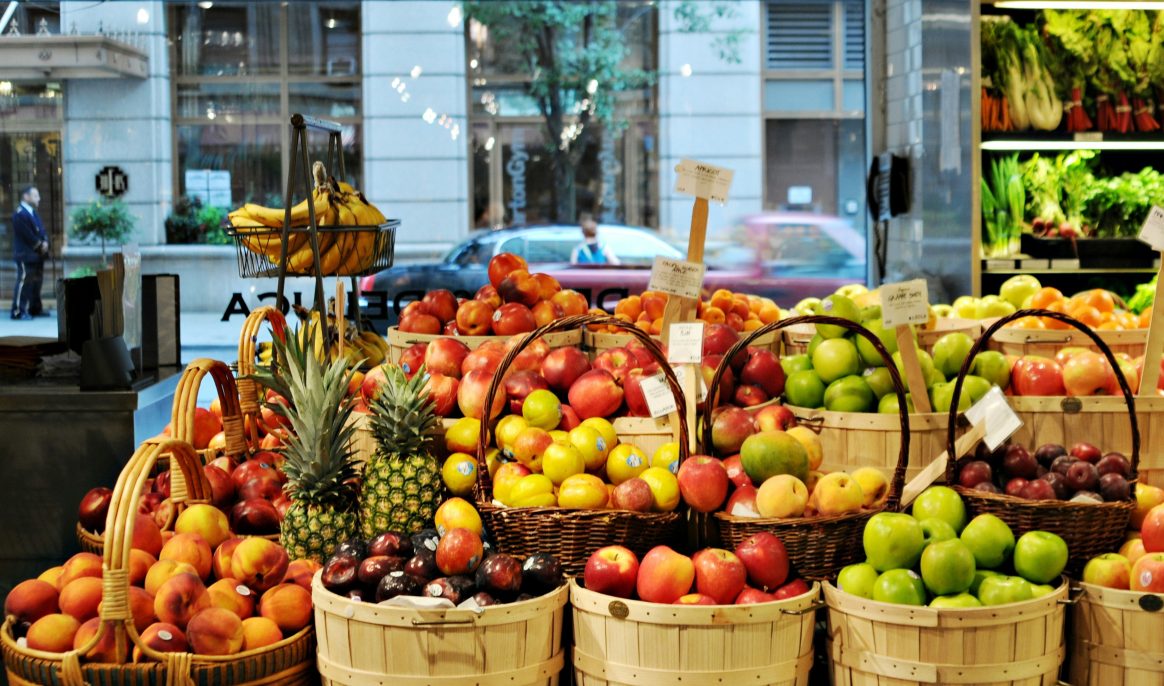
©Oren Elbaz via Unsplash - photo d'illustration
-
Sep 14, 2026 10:00
In New York City, a project is taking shape to tackle directly the most sensitive aspect of everyday life: the cost of food. Mayor Zohran Mamdani has announced the creation of a network of price-regulated municipal supermarkets, designed to guarantee access to shopping for all and especially for citizens in extremely precarious situations.
The first outlet will be the Peninsula project, scheduled for 2027 in Hunts Point, in the Bronx. This is one of the areas with the highest poverty rates in the city, with around 36% of the population living below the poverty line, compared with a municipal average of 18%.
The project: public stores, social housing and services
The plan is not limited to food distribution. Each municipal supermarket will be integrated with affordable housing and public spaces, as part of an urban strategy aimed at rebuilding social ties in the most fragile neighborhoods. After an initial experiment already launched in East Harlem, the stated aim is to extend the model to all boroughs by 2029: the Bronx, Queens, Brooklyn and Staten Island. The idea is to build a sustainable network of public outlets capable of reducing the impact of large private chains on food prices.
Political message and culture shock
When presenting the project, Zohran Mamdani defended a strong social vision of the role of institutions. His stance is clear-cut, particularly in the face of the economic policies of the past, symbolized by Ronald Reagan. The mayor declared:
"In the richest city in the richest country in the history of the world, no one should go hungry. That's why we're opening five city-run food stores, one in each borough, starting with the Bronx. Lower prices. Good food. Public ownership."
The message stands in direct opposition to the rhetoric of the "minimum state", thus inverting the famous Reagan formula on the role of the state. Mamdani argues, on the contrary, that the real problem is not public intervention, but families' growing difficulty in meeting essential costs.
A broader strategy involving taxation, housing and services
The supermarket project is part of a wider administrative program. Measures already launched include a tax on luxury second homes worth over $5 million, the freezing of hidden charges in certain public services, and an investment plan of over $250 million for social housing. In addition, $122 million has been earmarked for the recruitment of new teachers and an experimental phase for free childcare. Just as important, a new plan calls for the construction of 12,000 new affordable housing units, made possible in part by a federal agreement.
A debatable model
Reactions were immediate and clear-cut. Part of the population, especially in outlying districts, welcomed the initiative, seeing it as a concrete response to the rising cost of living. Conversely, conservative circles and a section of the business community have criticized the project as an "experiment in urban socialist economics".
At the same time, the municipality also boasts results in terms of infrastructure, with over 100,000 potholes repaired in the first months of its mandate. A sign that reinforces the image of a city in transformation, where the debate is no longer just about the present, but about the very model of urban social policy.
Share: