
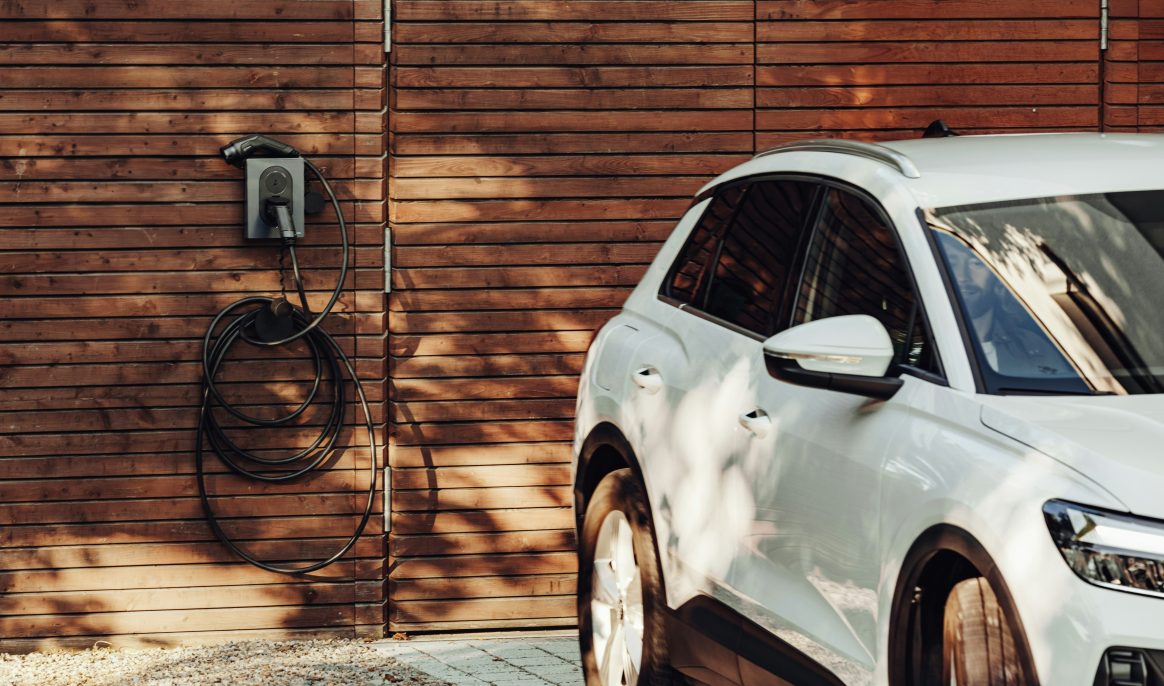
©Zaptec via Unsplash - photo d'illustration d'une voiture électrique
-
Sep 22, 2026 10:30
A European study assesses the potential of solar panels integrated into electric vehicles, balancing range, logistics, and grid capacity.
A car’s roof spends hours in the sun. Whether parked in front of a house or in a supermarket parking lot, this surface just heats up. The European SolarMoves project builds on this observation to transform this solar radiation into energy. We’re talking about Vehicle Integrated Photovoltaics (VIPV): solar cells installed on the roof, hood, and, in some cases, the sides. Cars, vans, and trucks thus become small mobile generators.
Results gathered as part of the project show that a solar-powered electric car can cover up to 55% of its annual energy needs in Central Europe, and up to 80% in the sunniest regions of Southern Europe. Although these are theoretical values, depending on usage, sun exposure, and weather conditions, they point in a concrete direction.
SolarMoves analyzed 23 vehicle categories using real-life driving, weather, and solar radiation data. The goal was not to predict the future, but to understand how much sunlight can actually be converted into driving range. For people who make short trips and often leave their cars outside, the benefit can be significant. During the most favorable months, external charging can thus be significantly reduced.
Freight Transport and Diesel
The most interesting aspect concerns freight transport. Trucks, vans, and trailers have much larger surfaces than cars and can accommodate more photovoltaic modules. According to the project, on electric trucks, integrated photovoltaics can increase daily range by up to 15%. In the summer, a trailer can generate up to 55 kWh per day from its roof alone, and reach 90 to 110 kWh if panels are also mounted on the sides of the car.
This energy can power refrigeration systems, hydraulic circuits, and other onboard equipment without draining the main battery. For vehicle fleets, this means lower energy consumption, reduced operating costs, and less reliance on charging infrastructure.
Diesel vehicles can also reduce some of their auxiliary power consumption, but the greatest benefit is seen in electric vehicles. Onboard photovoltaics do not eliminate the need for charging stations; however, they can reduce some of the energy demand on the grid. According to SolarMoves, if all new vehicles brought to the European market between 2024 and 2030 adopted this technology, electricity demand on the grid could decrease by 15.6 TWh in 2030.
To achieve this, however, clear regulations, dedicated certification procedures, and modules resistant to vibrations, impacts, and daily wear and tear are required. Integrating panels into a vehicle is far more complex than installing them on a house roof.
The solar-powered electric car is therefore not a car that can entirely do away with charging stations. It's a vehicle that makes better use of an existing surface, generates part of the energy it consumes, and reduces the number of charges required. The roof remains the same. But instead of just sitting there, it starts working.
Source: Fraunhofer
Share: