-
Jan 21, 2026 22:00
One figure makes you think: in Italy's economic heartland, one in 12 residents has assets of more than a million euros. That's according to the latest analysis by Henley & Partners, quoted by Italian economic daily Il Sole 24 Ore, which proclaims the Lombard capital as the favorite destination of the international financial elite.
The perfect cocktail that seduces the super-rich
What has turned Milan into a magnet for great wealth? A combination of several factors. Brexit left a void in the European landscape that the city has cleverly managed to fill. Its role as the center of Italian finance has been cemented. But the real trump card is the tax regime for great wealth: a unique outlier in Europe.
The exodus of millionaires from London says more about this transformation than a thousand statistics. In the British capital, there's now only one millionaire for every 41 inhabitants. The gradual dismantling of the non-dom status has ended the tax privileges that made the City irresistible for years. Those who used to pay taxes only on British income now seek more favorable places.
The invisible flow of capital
In 2025 alone, 3,600 wealthy individuals came to Italy, almost all to Milan. They brought more than $20 billion in liquidity, not counting real estate. Besides Dubai and Miami, Milan pops up in the Henley & Partners report as one of the rare cities in the world where "accelerated growth" in new inflows from high finance is predicted.
The Italian system rests on two pillars: an annual flat tax of 200,000 euros (until last year) for those who move their wealth to Italy and invest it in real estate or finance, and inheritance tax of 4%, on the Swiss model.
Breathtaking figures
Looking at the top of the pyramid, the true scale of the phenomenon becomes clear. Milan has 182 centimillionaires, that is, people with wealth in excess of one hundred million dollars: as many as Los Angeles or Paris, but with considerably fewer inhabitants.
The mechanism works like this: whether you earn 500,000 or 50 million euros a year outside of Italy, the tax authorities will settle for the lump sum. It runs for up to 15 years and can be extended to family members at a reduced rate. The result? A huge attraction for tech entrepreneurs, former top executives, professional athletes and retired gold rushers.
Why Milan beats other Italian cities
Of all possible destinations in Italy, the Lombardy capital offers the ideal balance between fiscal advantages and professional opportunities. The city has excellent connections, is close to European capitals and can count on numerous events and international circles. Rome enchants with beauty and history, but Milan is considered the rational, strategic choice for those who want to take advantage of the flat tax while remaining at the center of the economy.
Moreover, its 'new resident' status is compatible with business management, asset management and establishing Italian holding companies. For many, it's the perfect math: live in Europe, enjoy sunshine and Italian design, but pay less tax than in London or Paris.
The neighborhoods of the new super-rich
Where are these new rich settling? In the most exclusive districts: Brera, CityLife, Porta Nuova, San Babila, the Quadrilatero della Moda. This is where the luxury market is exploding. Penthouses overlooking the Cathedral, residences designed by star architects, futuristic apartments in skyscrapers with spa, fitness and 24-hour concierge.
Outstanding demand has driven prices to record highs. Transactions often take place without a mortgage, entirely in cash. Who's buying? Wealthy expats, investors, digital entrepreneurs, familiar faces from business and sports.
A seductive lifestyle
On top of that comes a cosmopolitan lifestyle on offer: Michelin-starred restaurants, global events like the Salone del Mobile and Fashion Week, fast connections to all of Europe, and an extremely vibrant cultural scene.
Milan offers an elegant yet efficient way of life, where Italian flair merges with a business-friendly mentality. Many see the city as a 'cool' pitch to be in as an alternative to London, Dubai or Paris: less crowded, a high standard of living, less tax hassle and more urban quality. For the new rich of the world, Milan is an irresistible mix.
How to discover the real soul of Milan
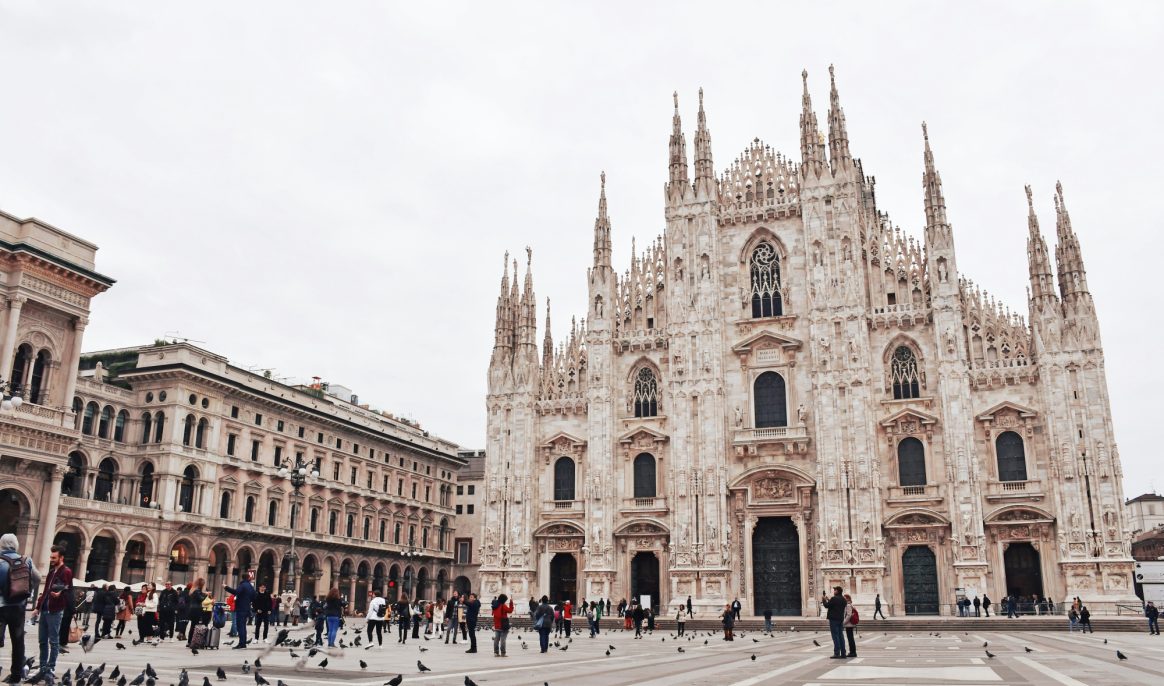
But how do you really penetrate the Milanese spirit? Unlike Rome and Venice, which show their treasures immediately, Milan requires patience. You start at the Cathedral, that marble mountain with 3,400 statues and 135 turrets, once dismissed by Oscar Wilde as a 'monstrous misfit'. Yet the Cathedral, as theatrical as it is, is not the true soul of the city. Milan is discrete, and subtlety reveals what goes on behind closed doors.
The Villa Necchi Campiglio is worth a visit, the 1930s modernist mansion where the film I Am Love was shot. In the austere rooms you can feel the Milanese restlessness, the obsession with innovation that goes hand-in-hand with the veneration of historic sites.
An example is the Bar Basso in Via Plinio, unchanged since 1947, where negroni is served in huge glasses (unless you ask for a 'fragola' glass, like the Milanese). Here, you will see waiters in bow ties, elderly people playing cards under imposing chandeliers and a general atmosphere from another era.
For something more modern, there is the area between Via Melzo and Via Lambro near Porta Venezia. Ultramarino for natural wines, Osteria alla Concorrenza for crostoni with steak, taleggio or - for those who dare - horse tartare with herring. Across the street, Bar Picchio, with its interior full of 1980s kitsch, fills up around seven for the spritz.
The ritual of the aperitif
Milanese live to have an aperitif after work; during the day, the city can seem gray, full of people on their way to the office or bank. It's the metropolis of industry, where you go to make money. The Italian London, of meetings and subways. But once work is over, the Milanese know how to celebrate life: excellent restaurants, sophisticated wine bars, top-level cultural programs.
A performance at the Scala is indispensable, the temple where Maria Callas and Toscanini performed. Thanks to the system in which tickets can be returned, there is often room even at the last minute. A standing place on the upper balcony for Mozart's 'Così fan tutte' costs only 30 euros. You have to bend over a bit to see anything and the velvet seats are narrow, but the acoustics are perfect and the gilded interior of the eighteenth-century theater is well worth the effort.
Another obligatory stop: the church San Maurizio al Monastero Maggiore on Corso Magenta. Unremarkable from the outside, inside you'll find an explosion of Renaissance colors. People call it the Sistine Chapel of Milan. Just when you think you have seen everything, you discover a hidden part that is even more spectacular.
Then it's time for a drink at Camparino, an elegant establishment overlooking the Cathedral from the Galleria Vittorio Emanuele II. Founded in 1915 by Davide Campari, the son of the drink's inventor, it serves Campari cocktails brought by waiters in white tuxedos. You'll find people dressed to perfection: some in heated business meetings, others alone with their thoughts, gazing at the Olympic village at the foot of the Cathedral and wondering when Milan will return to normal.
Share: