
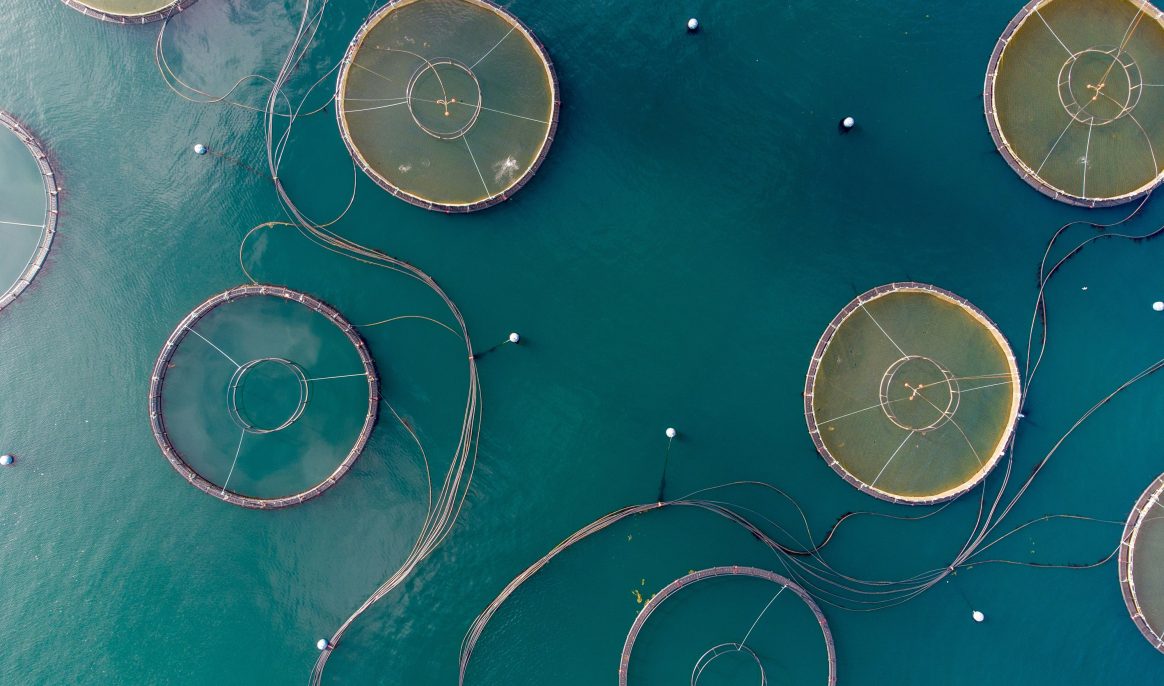
©Bob Brewer via Unsplash - photo d'illustration d'une ferme marine
-
Jul 04, 2026 13:23
Three million juvenile fish and 64,000 m³ of water (the equivalent of 20 Olympic-sized swimming pools): the Xinhuan No. 1 semi-submersible aquaculture platform has just anchored off the coast of Hainan. The goal? To fuel China’s massive ambitions in offshore aquaculture.
This ultra-optimized marine facility is China’s largest aquaculture structure, and it is set to house 3 million juvenile farmed fish (primarily grouper and four-fingered barb), which are in high demand in Asian markets.
According to New Atlas, the facility is fully compartmentalized to accommodate the fish’s various growth cycles. This specialized rotation system enables continuous, intensive production: the operator aims to produce approximately 4,000 metric tons of fish per year. To make the project profitable, the site also plans to open its doors to the general public with sea tours and recreational fishing activities.
Cutting-edge technology and environmental awareness
This marine behemoth is perfectly equipped to withstand the elements. Fitted with ballast tanks to adapt to marine conditions—particularly swells—it was designed and tested to withstand the region’s typhoons without buckling. In addition, a continuous water circulation system (operating 24 hours a day) replicates natural currents to maintain water quality.
This XXL facility is part of China’s broader strategy to move certain industries offshore, much like its recent underwater data centers, which operate, in part, using renewable energy.
The Downside
The environmental impact of these floating farms, however, remains a major unknown. While the Xinhuan No. 1 platform is smaller than Norway’s giant salmon farms, the model used by this global leader clearly shows that the massive discharges from this type of offshore farming cause severe damage that is nearly impossible to control.
Share: