
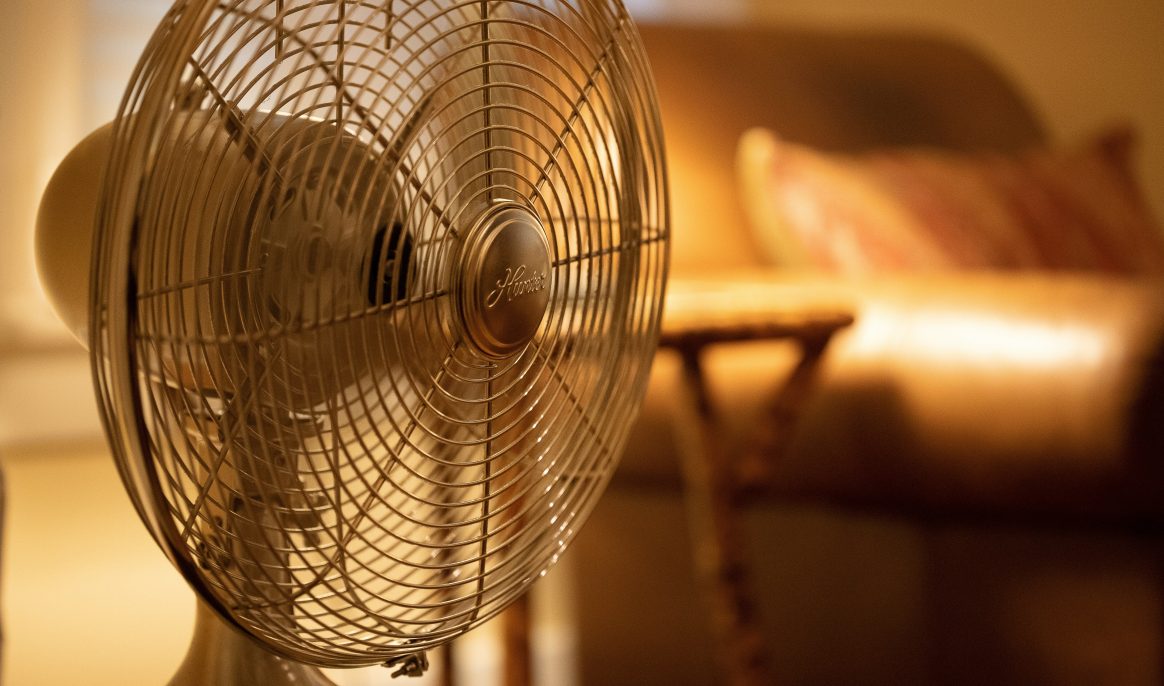
©Delaney Van via Unsplash
-
Jul 06, 2026 13:10
With summer temperatures rising higher and higher, a fan remains one of the most economical ways to stay cool. But what is its real impact on your electricity bill if it stays on all night? Here’s how much energy it uses, how much it costs, and why it can be an excellent alternative to air conditioning.
Power consumption depends mainly on the fan’s wattage, which, for household models, generally ranges from 20 to 80 watts. The most modern and efficient fans, particularly those equipped with a direct current (DC) motor, can consume even less.
To understand the impact on your bill, simply multiply the fan’s power by the number of hours it’s used. Taking a 50-watt model running for eight consecutive hours as an example, the total energy consumption is about 0.4 kWh.
Based on the average electricity price projected for 2026—approximately 0.158 euros per kWh—the cost for one night is around 6 cents.
In other words, even if you use the fan every night for an entire month, the total cost is unlikely to exceed 2 euros. Even if you choose a more powerful model, the cost remains minimal—lower than that of many other household appliances used on a daily basis.
Fan or air conditioner: Which one weighs heaviest on the bill?
The difference between the two systems is significant. A household fan consumes an average of between 20 and 80 watts, while an air conditioner can consume between 700 and over 2,000 watts when running.
This means that a fan can use up to twenty times less energy than an air conditioner used for the same number of hours.
Of course, the comparison isn’t entirely straightforward. An air conditioner actually lowers the room temperature and reduces humidity, while a fan simply circulates the air, making you feel cooler.
Is sleeping with the fan on bad for your health?
For most people, using a fan at night doesn’t pose any particular problems. However, prolonged exposure to a direct airflow can cause certain discomforts, especially in more sensitive individuals.
Among the most common discomforts are a dry throat, irritated eyes, a stuffy nose, and minor muscle aches caused by continuous exposure to the airflow.
Maintenance is also important. If the blades and grilles aren’t cleaned regularly, the fan can spread dust, pollen, and other allergens present in the room.
How to use your fan more effectively
To improve your comfort and reduce energy consumption, it’s helpful to take a few precautions. During the day, it’s best to keep windows, shutters, and blinds closed in rooms exposed to the sun to limit heat gain.
In the evening and at night, however, it’s advisable to promote air circulation by opening windows and using the fan to help expel warm air.
In addition, many models have a timer that allows you to set them to turn off automatically after a few hours, thus preventing unnecessary energy use while you sleep.
Another tip is to place a frozen water bottle or a bowl of ice cubes in front of the fan: this isn’t a substitute for an air conditioner, but it can temporarily increase the feeling of coolness.
Is it worth leaving the fan on all night?
From an economic standpoint, the answer is “yes.” Even if you use it for eight hours straight, the cost is only a few cents. For those looking for an affordable solution to beat the summer heat, the fan remains one of the most cost-effective ways to improve comfort at home without driving up the utility bill.
Share: