©Unsplash)
-
Jul 20, 2026 11:30
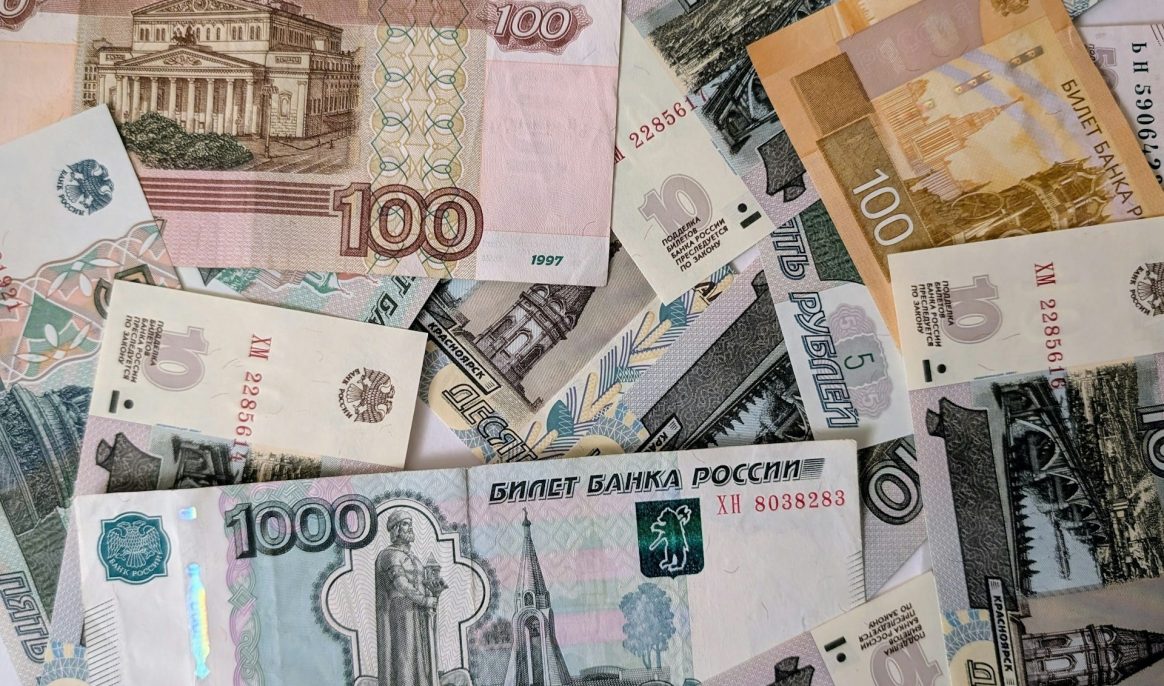
Since the beginning of the year, 1,560 billion rubles in cash have been put into circulation, representing the sharpest increase recorded over the same time period in years, excluding the COVID-19 pandemic period. This is according to reports by The Moscow Times and BBC News, citing figures from the Russian Central Bank.
This trend is linked to the war against Ukraine, but also to practical problems in daily life. In several regions, mobile internet connections are regularly disrupted after Ukrainian drone attacks prompted the Kremlin to implement security measures. As a result, payment cards and digital payments sometimes stop working, and more and more Russians are turning back to cash.
A Moscow resident told the BBC that cash gives her a sense of control and security, because in an emergency, she can still buy essentials even without a mobile network. But this return to cash is also driven by tax considerations. Since January, the Russian government has raised the VAT rate from 20% to 22% and lowered the threshold below which small and medium-sized businesses are required to pay taxes.
According to the BBC, pharmacies, restaurants, beauty salons, and small businesses are increasingly as ing their customers to pay in cash so that a portion of their revenue can remain off the books. Sberbank’s chief financial officer, Taras Skvortsov, warned that more and more companies are paying salaries “under the table” and that this money is not re-entering the banking system.
Small business owners are also feeling the pressure. A survey conducted by the business association Opora Russia shows that about 6% of them are already resorting to “parallel schemes,” such as concealing income or failing to issue receipts. In a commercial town in western Russia, a shopkeeper said that stalls were closing one after another because it was no longer profitable to stay open.
These figures underscore the slowdown in Russia’s wartime economy. In May, the Ministry of Economy revised its growth forecast for this year downward to 0.4%. According to the central bank, Russians withdrew 550 billion rubles from their bank accounts in May alone, including 200 billion from time deposits. Despite high interest rates on savings, cash therefore remains the safest option, while at the same time the government wants to draw more money out of the economy to finance the war.
Here’s how Russians are complicating Putin’s war
This trend is undermining Putin’s war chest in three ways: the government is collecting less tax revenue, has less control over cash flows, and must redouble its efforts to plug the growing budget deficit. Indeed, as Russians rely more on cash, a larger share of revenue escapes the control of tax authorities. As a result, VAT, social security contributions, and other tax revenues are declining, even as Moscow needs more money to finance the war.
The use of cash also fuels the black market and “under-the-table” wage payments, thereby preventing money from re-entering the banking system and reducing the government’s control over the economy. And this is all the more painful given that Russia is already grappling with rising war costs, higher taxes, and an economic slowdown; according to the BBC, this means the Kremlin must work even harder to secure every ruble.
Share: